Boron: The 1% Element Powering High-Performance NdFeB Magnets in AI Data Centers
- David Rogers
- AI Buildout Supply Chain
- 2026-07-03
NEED TO KNOW
- Essential 1% Magnet Stabilizer: Boron constitutes 1–1.2% by weight of NdFeB magnets, stabilizing the tetragonal Nd₂Fe₁₄B crystal phase to deliver unmatched coercivity and thermal stability.
- Geographically Diversified Mining: Unlike rare earths, raw boron mining is robustly anchored in Turkey (73% of reserves via Eti Maden) and the US (Rio Tinto's U.S. Borax in California).
- Downstream Magnet Concentration: While upstream mining is diversified, downstream ferroboron alloying and NdFeB magnet sintering remain 90%+ concentrated in China.
- Surging AI Data Center Storage: Skyrocketing AI dataset storage demands have cleared out enterprise HDD capacity, driving strong offtake for high-purity ferroboron feedstocks.
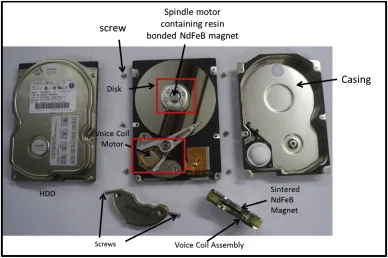
Neodymium-iron-boron (NdFeB) permanent magnets power hard disk drive motors, server cooling fans, and precision actuators in AI infrastructure. Boron makes up about 1% to 1.2% of the magnet by weight /Stanford Magnets/. Adding boron stabilizes the atomic crystal structure of the alloy, giving the magnet high strength, heat resistance, and efficiency. Today, NdFeB magnets account for more than 95% of the global high-performance permanent magnet market.
Global boron resources are abundant and geopolitically diversified compared with rare earths. Turkey holds ~73% of global reserves and leads refined borate production (Eti Maden, state-owned, ~50% share) /MDPI/. The United States (Rio Tinto Boron mine) is a major Western producer with very low net import reliance (~3.8% in recent data). Other contributors include Argentina, Bolivia, Chile, Peru, China, and Russia. USGS data confirm world resources are adequate for the foreseeable future; the US added boron to its 2025 Critical Minerals List /USGS/. Recycling is currently insignificant overall, though emerging NdFeB magnet recycling (focused on rare earths Neodymium and Dysprosium) may eventually yield boron as a byproduct.
Boron Refining & Ferroboron Magnet Alloy Process
Borate Mineral Refining
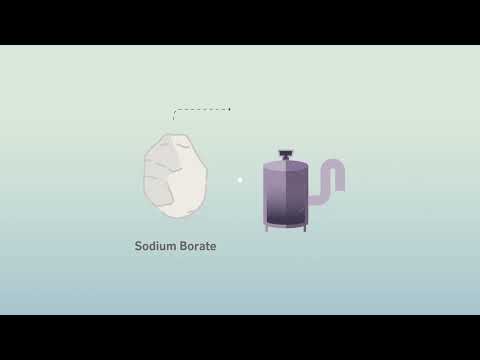
Boric Acid SynthesisMine crude borate minerals and dissolve them in acid to make pure boric oxide powder.
Electric Arc Smelting
Ferroboron ReductionSmelt boric oxide with iron ore in electric arc furnaces to produce ferroboron master alloy.
Vacuum Induction Melting
Magnet Strip CastingMelt ferroboron with neodymium and iron under vacuum to cast alloy strips for AI data center drive magnets.
Technical and cost challenges center on efficient, high-purity ferroboron production at scale while minimizing energy use, waste, and impurities. Emerging efforts from companies like 5E Advanced Materials have identified two redox-based (reduction-oxidation) process routes for mine-to-magnet optimization, alternative precursors, and domestic capacity /ACCESS Newswire/. Demand tailwinds are strong: AI data center buildout is driving HDD and cooling fan needs (with reported shortages and price pressure) /PCMag/, layered on top of robust growth from EVs, wind turbines, and precision industrial motors. NdFeB market expansion supports steady boron offtake in this high-spec niche, even if magnets represent only a small fraction of total boron consumption.
Upstream leaders include Eti Maden (Turkey) and U.S. Borax (US) for refined borates and high-purity inputs; ferroboron and magnet alloying/sintering remain more concentrated, with China holding ~90%+ of global sintered NdFeB production /BIS/. This creates indirect supply-chain risk for Western users despite boron mining diversification. Firms advancing non-Chinese magnet capacity (e.g., MP Materials, USA Rare Earth efforts in the US; European and Japanese players) rely on secure boron feedstock like that from U.S. Borax. As AI infrastructure scales, boron’s reliable, high-purity supply will be foundational to de-risking the precision magnets that keep data centers running efficiently. Boron may be small in the magnet recipe, but it is mighty for the AI era.
Key Insights
What is the function of boron in neodymium-iron-boron (NdFeB) permanent magnets?
Boron constitutes 1% to 1.2% by weight of NdFeB magnets, stabilizing the tetragonal Nd₂Fe₁₄B crystal structure to maximize magnetic strength, coercivity, and thermal stability. This allows the magnets to perform reliably in high-temperature environments, such as HDD spindle motors and server cooling fans within AI data centers.
Which countries control the global mining and refining of boron?
Turkey holds approximately 73% of global boron reserves, with its state-owned company Eti Maden managing about 50% of refined borate production. The United States is also a major producer, primarily through Rio Tinto’s U.S. Borax operations in California, which provides high-purity inputs for industrial magnet manufacturing.
What are the supply chain risks for boron inputs used in AI hardware?
Although raw boron mining is geographically diversified between Turkey and the United States, downstream ferroboron alloying and NdFeB magnet sintering are highly concentrated in China, which controls over 90% of global production. This concentration creates indirect supply risks for Western AI infrastructure developers relying on advanced permanent magnets.